 My Samford
Most people don’t ask “plaster vs Gyprock” because they’re curious. They ask because a tradie used both words in the same sentence, and it sounded like they meant different things. A builder might say “we’ll plaster it” and mean Gyprock. Your 1960s house might have neither, and have something else entirely.
That confusion is reasonable. “Gyprock” is a brand name that Australians use the way Americans say “drywall,” but the product underneath, plasterboard, is genuinely different from old-style wet plaster. One is a manufactured sheet you screw to a frame. The other is a wet material trowelled directly onto a wall in layers.
This matters because the two materials behave differently when you drill into them, repair them, or try to match them during a renovation. Get the wrong one, and a “simple patch job” turns into a wall that never quite matches. This guide breaks down what each material is, where you’ll find them, and which one you should actually be asking your tradie about.
What “Plaster” and “Gyprock” Actually Mean
“Plaster” is the generic term for a wall and ceiling lining material. It covers a whole category, including the wet, hand-applied lime and gypsum plasters used in older homes.
“Gyprock” is a specific brand. It’s owned by CSR and refers to their range of plasterboard, the pre-made gypsum sheets you see stacked on building sites. CSR Gyprock has been manufacturing plasterboard in Australia since it introduced the country’s first paper-faced plasterboard in 1947, and the brand has stayed in continuous local production for more than 75 years, according to CSR Gyprock’s official 75th anniversary announcement.
So the comparison isn’t really plaster vs Gyprock. It’s wet plaster vs plasterboard, with Gyprock being the dominant plasterboard brand most tradies default to by habit. Other brands like Boral and USG Boral make plasterboard too. Almost nobody calls it anything but Gyprock.
The Core Difference: Wet Plaster vs Plasterboard
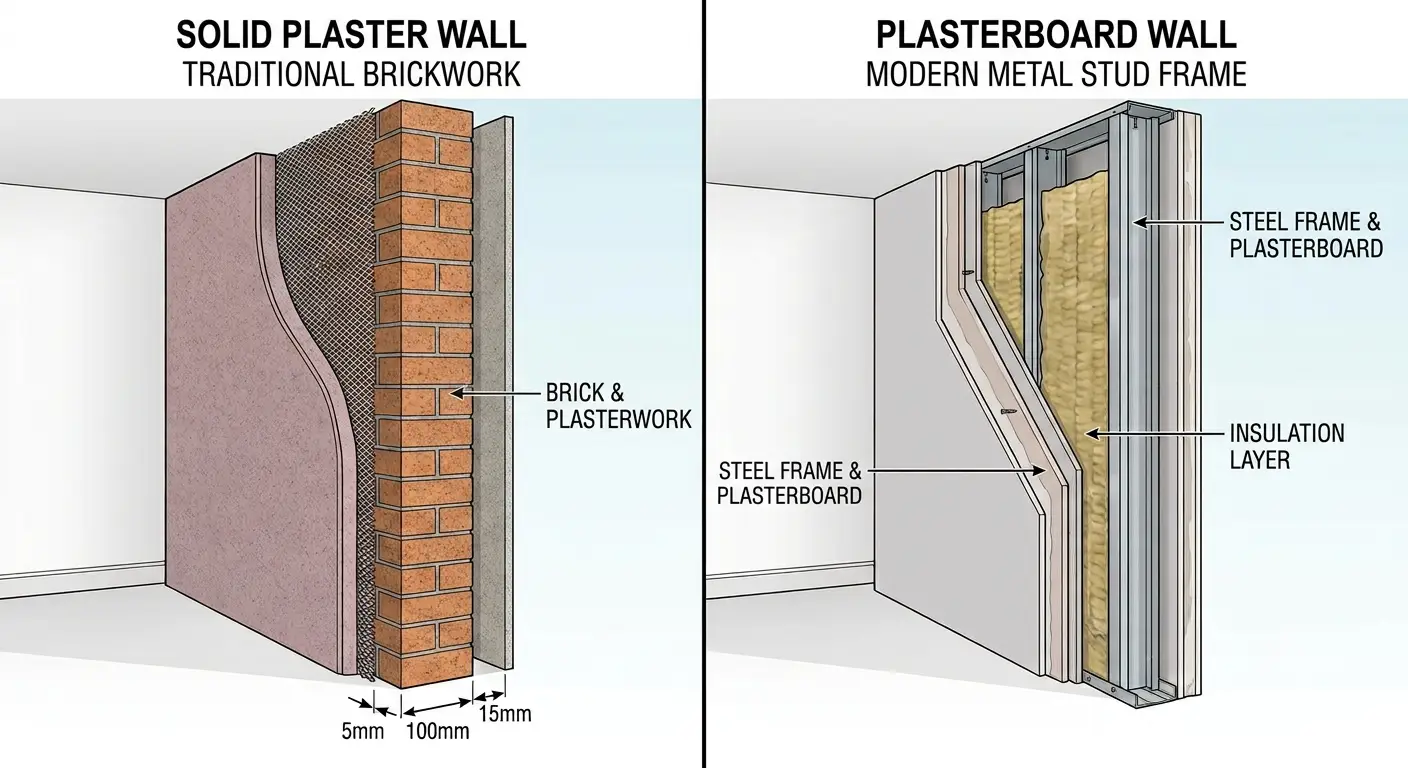
Wet plaster is applied as a paste, usually in two or three coats, directly onto a backing surface like masonry or lath. Each coat needs to dry before the next goes on. The final result is a continuous, seamless surface with no joints.
Plasterboard (Gyprock) is a manufactured sheet: a gypsum core sandwiched between two layers of paper. Sheets get screwed onto timber or metal framing, then the joints between sheets are taped and filled with a jointing compound.
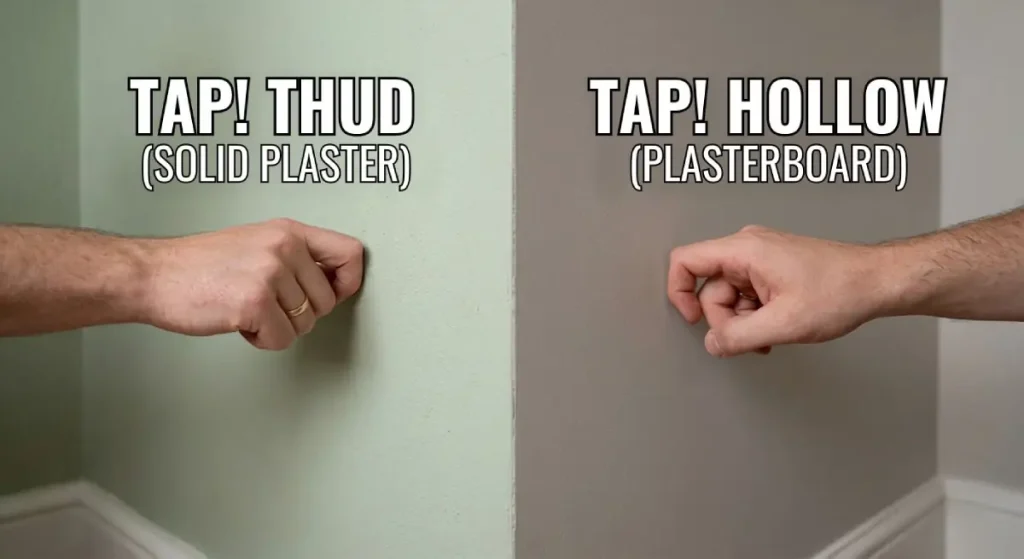
The practical difference shows up the moment you tap the wall. Solid plaster sounds dense and feels rigid under knuckle pressure. Plasterboard has a slight hollow give, and you can usually feel the stud or joint lines beneath the surface if you run a hand across it.
How They’re Made and Installed
Wet plastering is a wet trade. A plasterer mixes the material on site and applies it by hand with a trowel, building up thickness over multiple visits across several days. Drying time depends on humidity, thickness, and ventilation, and rushing it causes cracking later.
Plasterboard installation is a dry trade. Sheets arrive pre-cut or get cut on site, get fixed to the frame with screws, and the joints get covered with paper or mesh tape and three coats of compound: a base coat, a second coat, and a final skim. Sanding between coats keeps the surface flat.
This is the main reason plasterboard dominates new construction. A plasterboard ceiling can be sheeted and ready for paint within a week. A solid plaster ceiling of the same size can take two to three weeks, once you include drying time between coats.
Plaster vs Gyprock: Side-by-Side Comparison
| Factor | Wet Plaster | Gyprock (Plasterboard) |
| Material form | Wet paste, applied by hand | Pre-made gypsum sheet |
| Installation speed | Slow, multiple drying stages | Fast, dry-fix and finish |
| Surface finish | Seamless, no joints | Joints visible if poorly finished |
| Sound when tapped | Solid, dense | Slight hollow give |
| Repair difficulty | Skilled trade, hard to match | Easier to patch, joint-based |
| Common in | Pre-1970s homes, heritage builds | Virtually all modern construction |
| Fire/acoustic ratings | Variable, depends on thickness | Specific rated products available |
| Curved or ornate work | Well suited | Limited without specialist sheets |
When You’d Still Choose Wet Plaster
Heritage and character homes are the main case. If you’re restoring an original 1920s or 1930s house, matching the existing seamless plaster finish with plasterboard joints will look wrong under raking light, especially on ceilings.
Curved walls, archways, and ornate cornice work also favour wet plaster. Plasterboard can be curved using flexible sheets, but tight radius curves and hand-detailed ornamental work are still a wet plasterer’s domain.
Some older fire-rating and acoustic specifications in heritage buildings were designed around solid plaster thickness. A heritage consultant or building certifier will usually flag this if it applies to your project.
Heritage homes often involve similar trade-offs elsewhere in the house. Matching original character means weighing flooring material options against modern, faster-to-install alternatives.
Cost and Time Differences
Plasterboard is cheaper per square metre in materials and labour because installation is faster and the trade is more widely available. A standard Gyprock ceiling will generally cost less than a solid plaster equivalent of the same size.
Wet plastering costs more because of the skill level required and the time on site across multiple visits. Fewer tradespeople can do it well, which pushes labour rates up in most Australian cities.
The time gap compounds on a whole-house renovation. If your build schedule has other trades waiting on walls to be ready for paint, plasterboard’s shorter drying and finishing time keeps the project moving.
Material decisions like these come up throughout a renovation, not just with walls and ceilings. The same logic applies when homeowners are weighing up roofing material choices for durability against upfront cost.
How to Tell Which One Is Already on Your Walls
Tap the wall in several spots. A consistent, solid sound across the whole surface usually means wet plaster on masonry or lath. A sound that changes every 400-600mm, hollow between taps, solid right at the tap point, usually means plasterboard on studs.
Look closely at the surface under bright light. Faint vertical or horizontal seams, even after paint, often reveal plasterboard joints that weren’t perfectly flush.
Check the age of the house. Most Australian homes built from the 1970s onward use plasterboard as standard. Homes built before that are more likely to have original wet plaster, though many have been renovated with plasterboard since.
Repairing Plaster vs Repairing Gyprock
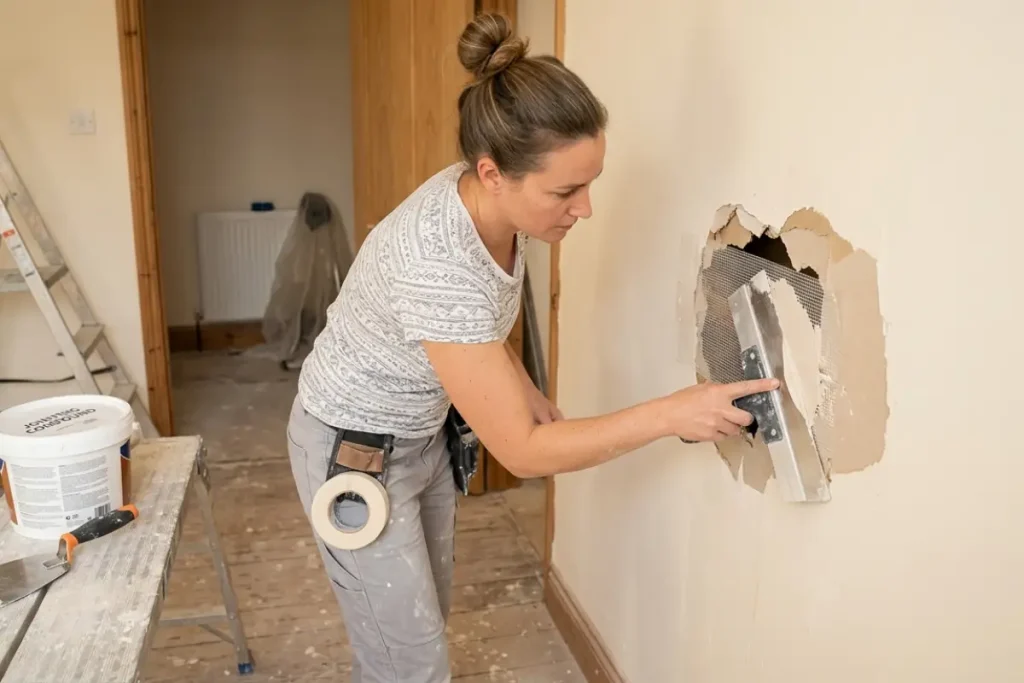
Plasterboard repairs are usually straightforward. A hole gets patched with an offcut or plasterboard repair clip, taped, and finished with jointing compound in layers. Most tradespeople can do this competently.
Wet plaster repairs are harder to blend invisibly. Because the original surface has no joints, any patch needs to be feathered out over a wider area to avoid leaving a visible edge or texture mismatch, especially under paint sheen.
If your wall is solid wet plaster and you need significant repair work, it’s worth finding a plasterer experienced specifically in traditional solid plaster rather than a general gyprocker, since the technique and finishing approach are different skills.
Pro Plaster N Paint is one example of a trade that handles both wet plaster restoration and standard Gyprock work, which matters if you’re not sure yet which one is behind your wall.
Conclusion
“Plaster vs Gyprock” really comes down to wet plaster vs plasterboard, with Gyprock being the brand name most people use for plasterboard out of habit. Wet plaster is a hand-applied, seamless material common in older and heritage homes. Plasterboard is a manufactured sheet product that dominates modern construction because it’s faster and cheaper to install.
Most homes built since the 1970s will have plasterboard, while older and heritage properties are more likely to have original wet plaster, sometimes mixed with plasterboard from past renovations. Knowing which one is on your walls before you start a repair or renovation tells you who to hire and what kind of timeline and budget to expect.


 My Samford